A harness fit check before the walk
Compare actual measurements, watch the straps during a turn, and check the fit before heading through the door.
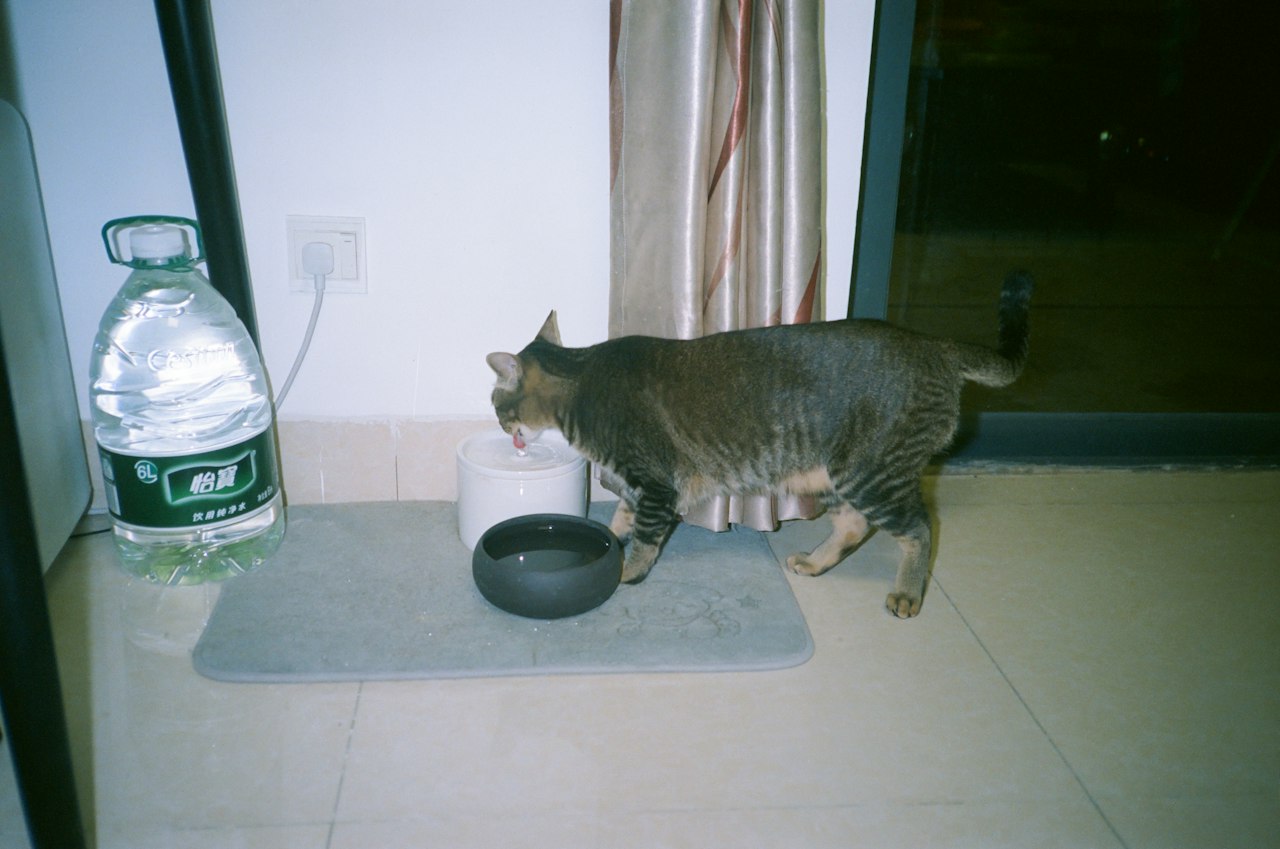
Picture a kitchen where the water bowl sits beneath the coffee mugs and beside the food. Someone reaches across it several times each morning, while a second cat likes to rest in the doorway. I might initially be drawn to a fountain that promises to make drinking more appealing. But following the cat’s route through that kitchen changes my first choice: I would look for a quieter, more accessible water location before changing the machine.
This is also where I separate preference from health. PDSA advises veterinary assessment for increased drinking or urination; a changed pattern should not become a shopping experiment. Cats Protection discusses sensible bowl placement and individual choices. For the household I am considering, my aim is ordinary access that holds up through a busy morning, with any fountain added as an option rather than a required upgrade.
Start with what is different. A cat who has always preferred one location presents a different question from a cat suddenly emptying the bowl faster or urinating more. PDSA advises veterinary assessment for increased thirst and urination and specifically says not to withhold water. Do not try to solve a new pattern by removing the bowl, changing food abruptly or assuming a fountain will address the cause.
Describe the change in ordinary terms: which bowl is being used, whether it needs refilling more often and whether toileting has changed. In a shared home, acknowledge when another animal could account for the difference. Ask the veterinary team what observations would be useful. A household note can support assessment, but the amount missing from a bowl is not a diagnosis and may include spills or evaporation as well as drinking.
I would look at the route while the mugs are actually being used, not only after the kitchen is empty. From the cat’s height, a reachable bowl may still sit under repeated movement, beside appliance noise or beyond another pet’s resting position. Cats Protection recommends separating water from food and toileting areas and offering appropriate choices. I would use that guidance to identify a quiet alternative with a clear approach, while keeping familiar water available. The question is whether the cat can use it comfortably during the ordinary day.
For the kitchen example, consider an additional suitable bowl in a quieter accessible place while keeping the familiar option. Avoid moving every resource at once. The alternative should remain available throughout the day, including when doors are closed for visitors or cleaning. A bowl in a peaceful bedroom is not useful if the cat cannot enter it. Access is part of the equipment decision, even though it does not appear on a retailer’s specification sheet.
A suitable bowl should be stable, easy to clean and appropriate for the cat to use comfortably. Cats Protection suggests materials such as ceramic, metal or glass rather than plastic that may affect the water’s taste. Inspect the actual item for damage and follow cleaning guidance. The shape and location should make drinking straightforward without requiring the cat to negotiate an awkward edge or a cramped corner.
Do not let a preference for a matching set dictate the arrangement. Food and water do not have to stand together simply because the bowls were sold as a pair. A modest separate bowl may solve a practical access problem more effectively than a larger appliance. Choose something the household can wash, refill and return to the correct place reliably. Maintenance that happens consistently matters more than an attractive product that is difficult to keep clean.
Agree who checks and refreshes water and how bowls are cleaned. In a household with several caregivers, everyone can assume someone else has done it. A simple routine tied to ordinary care is more reliable than waiting until a bowl looks empty. Keep suitable water available throughout the day, and check the arrangement after spills, cleaning or a pet moving the bowl.
The same care applies when a sitter visits. Show each water location and explain which doors must remain accessible. If a bowl is placed upstairs or in a quiet room, it can be overlooked by someone who expects everything in the kitchen. The handover should identify all the options, not merely say water is available. A clear routine makes the arrangement work when the usual person is not present to notice a missed refill.
A fountain may suit a cat who prefers moving water, but the purchase should answer a specific practical question. Consider whether the cat is comfortable with movement and sound, whether the unit fits a suitable location and whether it can be cleaned as directed. Do not infer that drinking from a tap means every fountain will be welcomed. Designs differ, and the individual’s response matters more than the category.
Read the instructions before buying if possible. Check access to the pump and internal surfaces, filter replacement requirements and the manufacturer’s operating guidance. A unit that is awkward to disassemble may become difficult to maintain in ordinary life. Include ongoing supplies and cleaning effort in the comparison, without treating a filter as a substitute for washing the parts that contact water. The useful product is one the household can care for consistently.
| Question | Bowl consideration | Fountain consideration |
|---|---|---|
| Access | Quiet, separate, reliably open route | The same location needs still apply |
| Cleaning | Easy to wash and inspect | Pump and internal parts need directed care |
| Reliability | Fresh water checked routinely | Keep a bowl for cleaning or power loss |
| Preference | Observe the individual cat | Do not assume movement is universally preferred |
Set up the fountain according to its instructions in an appropriate place and allow the cat to investigate voluntarily. Keep a familiar bowl available. Removing the only known water source to encourage use of the new device turns a preference experiment into an unnecessary restriction. Do not carry the cat to the fountain repeatedly or push its face toward the water to demonstrate how it works.
If the household later tries a fountain, I would watch it at the same unremarkable times: before breakfast, during the kitchen traffic and when the room becomes quiet. The familiar bowl stays available. A cat choosing that bowl has not failed the introduction, and an expensive new object does not deserve extra persuasion. If movement or noise seems unwelcome, I would reconsider the product or position. I want the purchase to earn its place through comfortable use and manageable care, rather than become something the cat is expected to justify.
A fountain is an appliance as well as a drinking surface. Follow the manufacturer’s electrical, cleaning and operation instructions, keep cords safely managed and do not improvise repairs. Have an ordinary suitable bowl available so drinking does not depend entirely on a powered mechanism. Check what remains accessible if the unit stops, needs cleaning or is moved while the floor is washed.
Write down the cleaning sequence if several people share the task, particularly which parts must be removed and reassembled. Check for damage and replace components appropriately. If maintenance is regularly postponed because the design is cumbersome, a simpler bowl may be the better everyday option. The comparison is not between modern and old-fashioned care. It is between arrangements that the household can keep usable and ones that are likely to become neglected.
A cat’s water needs and visible drinking vary with factors including food moisture and individual circumstances. Avoid comparing the level in your bowl with a fixed online target without veterinary guidance. A cat eating wet food may be seen drinking differently from one eating dry food, but that does not explain every change. The useful baseline is the individual animal’s ordinary pattern, with professional assessment when it shifts noticeably.
If the veterinarian asks for intake information, follow their instructions and record limitations such as multiple pets, spills or an additional water source. Do not remove necessary water to make measurement easier. Note urination and other changes the team asks about. A fountain can make casual measurement harder, so discuss how to obtain useful observations rather than relying on an app or a reservoir level as a complete account of the cat’s health.
Once the novelty has passed, I would walk the kitchen route again. Is the quieter bowl still reachable, or has a storage basket gradually occupied its approach? Does the doorway remain a bottleneck? If there is a fountain, is its actual cleaning routine keeping up with its needs? These small household changes matter more than the first enthusiastic look at a new object. I would retain the useful choices and simplify anything that adds maintenance without improving access, keeping health observations separate from judgments about which bowl looks most appealing.
Continue to treat health changes separately from equipment preferences. A cat who suddenly drinks much more, urinates differently or seems unwell needs veterinary advice. Difficulty passing urine is urgent. The household can improve placement and care while that assessment happens, but it should not wait for a new product to prove itself. The best drinking setup supports ordinary welfare and makes changes easier to notice; it does not promise to prevent every medical problem.
My preferred ending is an ordinary morning in which water is fresh, the approach is clear and someone knows the refill routine. That may include a fountain, or it may remain a few well-placed bowls. I would judge the arrangement from the cat’s route through the kitchen, and take a changed drinking pattern to the vet rather than back to the product catalogue.
A: No. Keep fresh water available and retain a familiar option while introducing a new one. The cat should be able to choose without losing access to drinking water. If the fountain is ignored, assess the location, noise and design rather than forcing use.
A: Not necessarily. A noticeable change in thirst or urination deserves veterinary advice rather than an automatic positive interpretation. Record what changed and any uncertainty about spills or other pets. Never restrict water to test the pattern.
A: No. Follow the manufacturer’s instructions for cleaning the unit and replacing filters. Internal surfaces and the pump may need attention as specified. Choose a design the household can maintain reliably and keep a suitable bowl available during cleaning or interruptions.
A: Cats Protection recommends offering water away from food and toileting areas. Consider a suitable separate location and observe use while maintaining access. A matching product set should not prevent the household from arranging resources in a way the cat finds comfortable.
A: Contact your veterinarian about a noticeable or persistent change in drinking or urination, or if the cat seems unwell. Difficulty passing urine requires urgent attention. Do not assume the cause is a bowl preference or wait for a fountain trial before seeking advice.
Reference details checked Nov 10, 2026. Rules and guidance can change; follow the current source where applicable.
Something needs a correction? Let us know.
Compare actual measurements, watch the straps during a turn, and check the fit before heading through the door.
Choose for security and everyday comfort, then practice entry, closure and lifting as separate steps.
Start with an easy way to reach the food, then adjust one feature while watching comfort, safety and interest.