A harness fit check before the walk
Compare actual measurements, watch the straps during a turn, and check the fit before heading through the door.
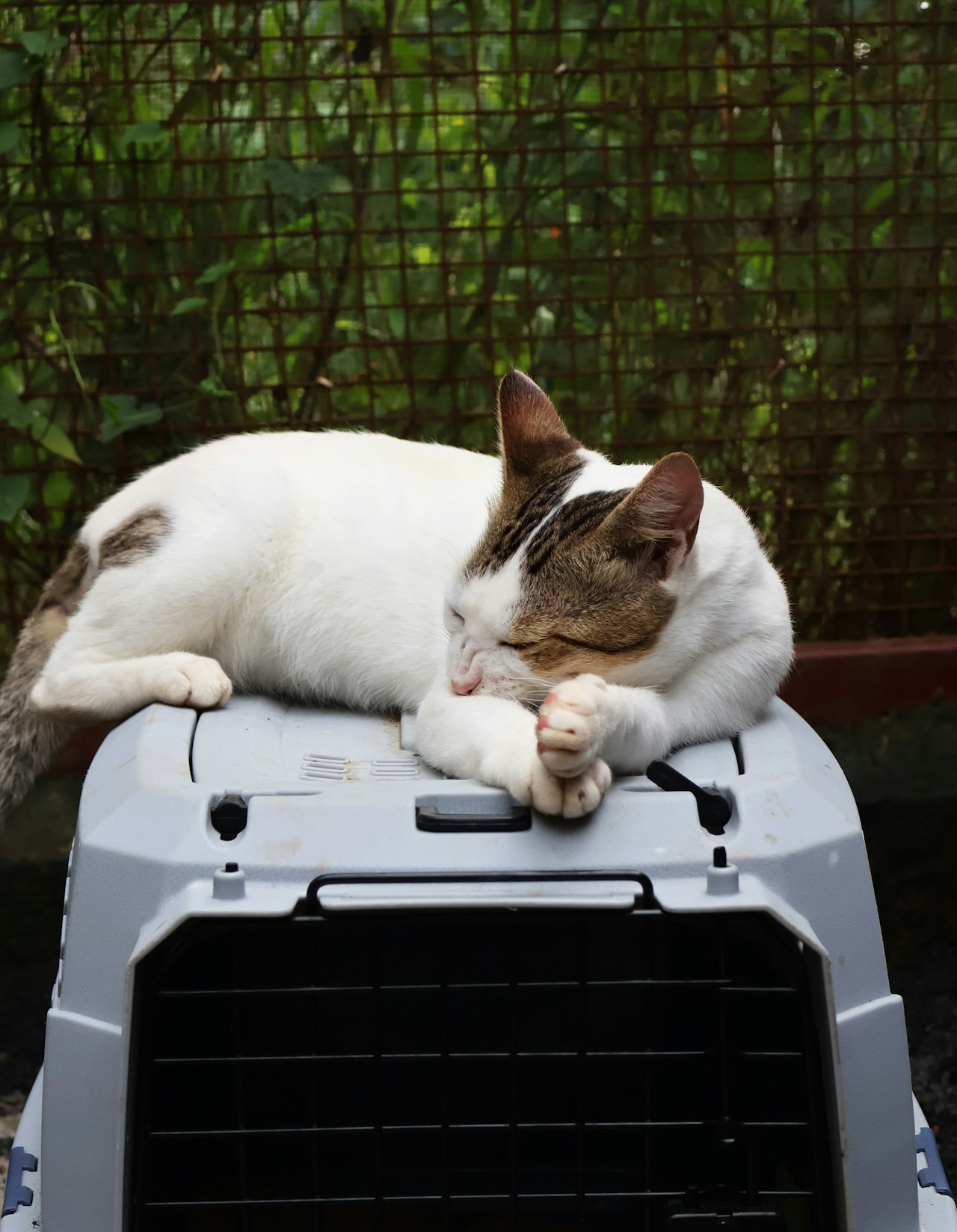
The carrier often appears just when the household becomes unusually busy: keys are found, doors are closed and somebody checks the appointment time. A cat has little reason to regard that sudden object as familiar furniture. Leaving an appropriate carrier accessible during ordinary days changes the opportunity to learn about it.
My starting point is two settings: the quiet corner at home and the necessary journey. A carrier must be secure for transport, but its opening, cleaning and assembly should also make gradual familiarization practical. Styling comes after those jobs. The most promising design is one the household can use correctly, leave accessible and carry steadily with the individual cat inside.
Check the latches, joins, handle and ventilation. Can you assemble it correctly and confirm that it is secure? Cats Protection recommends a sturdy, easy-to-clean carrier with enough room for comfortable positioning. A removable top can make some training and veterinary handling easier.
The useful shopping question is how the carrier will function with your particular cat, not whether another owner’s photograph looks relaxed. A large, heavy carrier can also be difficult for a person to carry steadily. Consider both the animal’s space and the handler’s practical ability to support it.
Set the open carrier in a quiet, accessible area with suitable familiar bedding. Keep it stable and avoid blocking a busy route. Cats Protection’s training guidance allows the cat to explore gradually, with bedding initially nearby if approaching the carrier is difficult.
Picture a small apartment where the carrier sits beside a reading chair instead of emerging from a high cupboard only for appointments. That corner gives the cat ordinary opportunities to approach it. Keep the space available without children or other animals disturbing the cat inside, and avoid a position that must be dismantled every time someone uses the room.
Reward comfortable investigation and entry with something appropriate for the cat. Let them leave. Closing the door immediately the first time they step inside can change the meaning of the exercise. Entry and remaining inside are different learning steps.
Once the cat is comfortable, introduce a very brief door movement or closure at a manageable level, then progress gradually. The Feline Veterinary Medical Association’s visit guidance emphasizes preparing for the carrier and journey. There is no universal number of sessions; the animal’s response determines what is reasonable.
Imagine the cat now enters the carrier voluntarily beside the reading chair. That is useful progress, but it does not mean the next step should be a closed door, a lift, the stairs and a running car in one sequence. Each adds something new. Keep the learning question small enough to answer: is the cat still comfortable when the door moves, before it closes or the carrier leaves the floor?
A manageable progression might begin with the person sitting nearby while the cat explores. Later, after comfortable entry is established, a small door movement can become familiar. Brief closure comes before carrying. The exact pace is individual, so the plan should allow a return to an easier stage when concern appears. Repeatedly pushing to the point where the cat tries to escape is not useful proof that the session was challenging enough.
Progress also includes recovery between steps. Does the cat continue to approach the open carrier during ordinary time, or disappear whenever someone sits beside it? If practice makes the object less usable at home, reconsider what happened and ask the veterinary team for help. You are building a routine that has to survive beyond one successful entry, not trying to win a race against a training calendar.
| Established comfortable step | One possible next change | Reason to pause |
|---|---|---|
| Exploring an open carrier | Person sits quietly nearby | Approach stops when the person appears |
| Entering and remaining voluntarily | Gentle door movement | Cat becomes concerned or rushes away |
| Comfortable brief closure | A small, supported lift | Movement causes distress |
| Home practice going well | Plan a necessary journey with the clinic | Urgent care or marked travel fear needs individual help |
Lifting adds movement and sound to an already familiar object. Practice only after the cat is comfortable with the preceding steps, and keep the carrier supported. A calm, stable lift in the home is different from immediately walking outside and starting a car.
In that apartment, the practice route might initially be no farther than another safe place in the room. It should not become a daily unnecessary trip around town. Cats Protection advises secure transport and never allowing a cat to travel loose in a car. Follow suitable vehicle and carrier guidance for the actual journey.
Prepare the human part of the trip while the carrier is empty. Locate the clinic entrance, decide where the carrier will be secured according to appropriate transport guidance, and check how you will open doors without setting it somewhere precarious. Keep records, keys and payment items together. Reducing last-minute searches leaves more attention for carrying steadily and checking every fastening.
Before deciding on a carrier, consider where it will be stored, how it opens and whether the person can carry it steadily with the cat inside. A large design may provide space but be awkward through a narrow doorway. A removable top may be useful, but only if the joins can be correctly reassembled and checked. Read the manufacturer’s instructions and inspect the fastening system rather than relying on a photograph of a relaxed cat in a display model.
Practice the human tasks while the carrier is empty. Open and close the door, check the latches, lift it with suitable support and plan the route from the home to the vehicle. Identify where you would need a second adult to manage a door. This preparation does not require the cat to participate in a rehearsal of every inconvenience. It removes avoidable surprises so the real journey can be steadier and more predictable.
Keep the carrier appropriate to the individual cat and any medical needs. Ask the veterinary team if mobility, size or distress makes the choice uncertain. A product advertised for several uses is not automatically suitable for all of them. The purpose here is secure necessary transport and comfortable familiarization at home, not extended recreational carrying. A cat who uses the open carrier as a resting place still needs careful management when the door closes and the setting changes.
After an appointment, it can be tempting to put the carrier straight back into a cupboard because the difficult part is over. Check whether it needs cleaning, drying or replacement bedding, following suitable instructions, then return it to the familiar home location when ready. Keep the ordinary arrangement low-pressure. The next interaction with the carrier need not become another practice session immediately; it can simply be available while the household returns to its normal routine.
If the journey was difficult, note the specific part that caused concern. Was the carrier hard to assemble, did the person struggle to carry it steadily, or did the cat become distressed before leaving the room? These observations help the clinic advise on a future plan. Avoid using repeated unnecessary journeys to prove that the cat should get used to it. Transport fear may need individualized veterinary and behavior support, particularly when the next visit is important and cannot be postponed.
In a multi-cat household, maintain separate carriers and care arrangements as needed. Do not assume that friendly cats should share a confined space during an unfamiliar journey. Also avoid turning the returning cat’s carrier into the focus of an excited household greeting. Give the animal space and follow any discharge instructions from the clinic. The carrier routine should support recovery and ordinary comfort, while medical advice determines what activity and handling are appropriate after the visit.
An upcoming emergency cannot wait for weeks of familiarization. Call the veterinary team for practical advice if the cat cannot be transported safely or becomes very distressed. Any medication or special travel preparation must come from that team; do not improvise sedatives or alter prescribed treatment.
After the visit, clean the carrier appropriately and return it to its ordinary place when ready. Check for damage and replace bedding as needed. Keeping it accessible gives the household a chance to rebuild familiar associations instead of storing the object away with the whole experience until the next appointment.
A carrier earns its place before appointment day. Choose a secure design, give it an ordinary quiet location, and teach each new movement separately enough to notice the cat’s response. The result is a usable plan for home and travel, with the veterinary team ready to help when a necessary journey cannot wait for gradual practice.
A: When safe and practical, an open, stable carrier can remain accessible as a familiar option. Ensure the door cannot swing unexpectedly or trap the cat.
A: No. It needs suitable space and secure support for the individual cat. Follow the carrier guidance and ask your veterinary team if unsure.
A: Separate carriers are generally preferable for safe, manageable transport. Cats Protection advises a carrier for each cat, even when they are friendly at home.
A: Tell the clinic about the difficulty now, including what happens when the carrier appears and whether transport has caused marked distress before. They can advise on safe preparation for the individual cat. Do not delay urgent care to finish a training plan, and do not improvise sedatives or alter prescribed treatment to make the journey easier.
A: No. Use an appropriate secure carrier and follow transport guidance. A loose cat can be injured, escape or interfere with safe driving.
Reference details checked Nov 10, 2026. Rules and guidance can change; follow the current source where applicable.
Something needs a correction? Let us know.
Compare actual measurements, watch the straps during a turn, and check the fit before heading through the door.
Start with an easy way to reach the food, then adjust one feature while watching comfort, safety and interest.
Check access, freshness and placement first, then decide whether a fountain solves a problem your cat actually has.