A walk with room to sniff
Choose a quieter loop, leave room for safe pauses, and stop every interesting hedge becoming a race to get home.
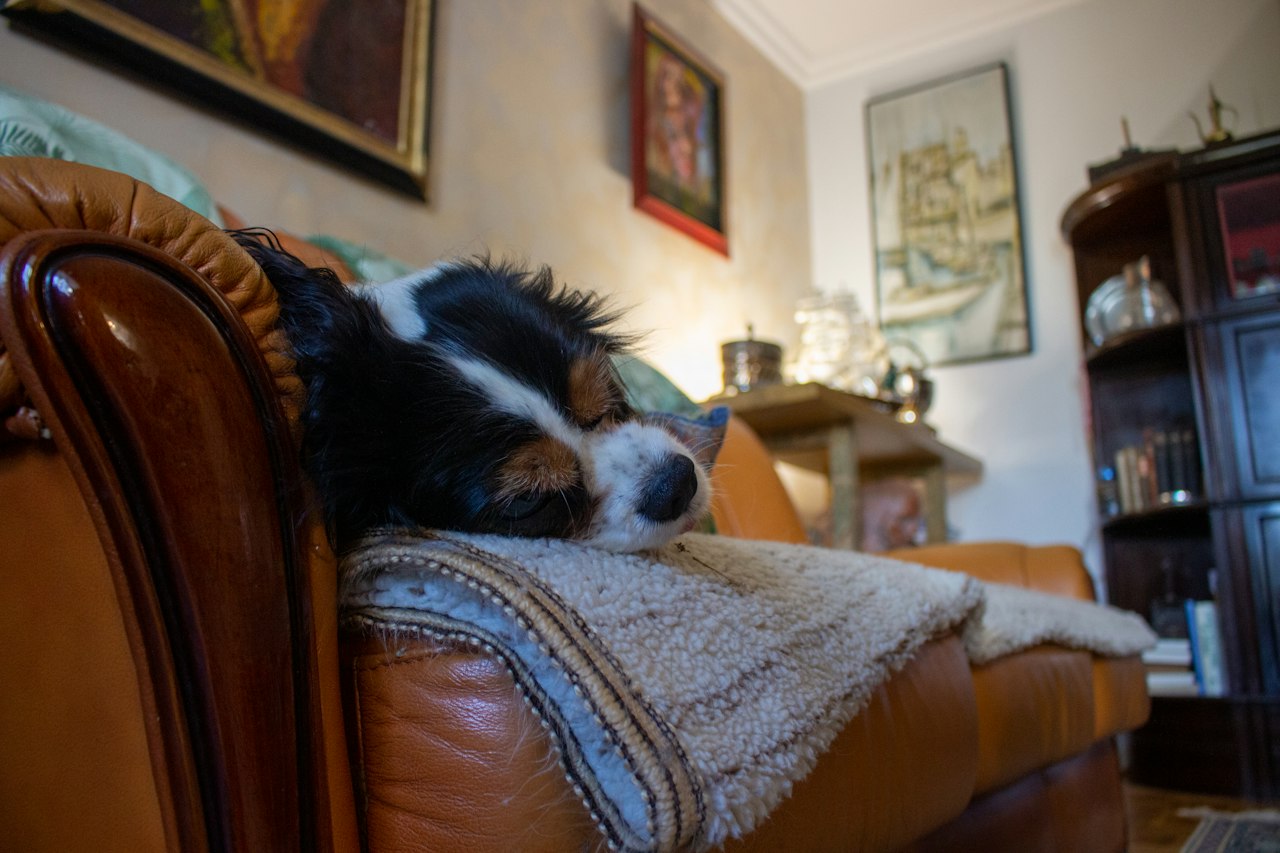
Picture a short piece of ordinary camera footage: the dog leaves the sofa, crosses to the doormat, returns, then makes the same journey again. The familiar food toy remains where it was placed. My first impulse might be to improve the toy or make the next absence more tiring beforehand. But in the example I want to explore, I would pause over that repeated route instead. Something about the absence deserves a closer look.
I separate the learning plan from the practical need for care. RSPCA guidance supports gradual comfortable alone-time work and veterinary or qualified behavior help when distress is present. I am not trying to extract a longer result from the next recording. I want this household to understand the dog’s experience and cover the absences that tomorrow’s calendar already contains.
I would watch the ordinary footage once for the sequence, then again for context: the door closes, a sound comes from the landing, the dog crosses to the mat. I write those events down without deciding immediately what they mean. The camera must be positioned safely and respect other people’s privacy, and I would not extend an absence to get a more convincing reaction. What matters is whether the route is linked to a particular event or continues throughout the absence; that distinction can help the professional conversation.
Keep the description neutral. Walked between the door and sofa, vocalized after the lift sounded, or left the food untouched are observations. They do not establish a diagnosis by themselves. A veterinarian or qualified behavior professional can use that information alongside health and history. If the dog is already injuring themselves, attempting dangerous escapes or showing marked distress, contact the veterinary team promptly and prioritize a safer care arrangement rather than collecting more footage.
A dog who is not barking may still be struggling. Look at the whole pattern rather than treating silence as the only measure. RSPCA notes that separation-related problems are not always obvious to owners. Equally, a single movement or yawn is not proof of a particular emotional state. The task is to understand a repeated sequence in context, with professional help when the meaning is uncertain.
For the camera example, the untouched toy is relevant because the dog normally enjoys it while the person is present. It is not a diagnostic test or a reason to add increasingly tempting food. The contrast tells you that the context changed the dog’s behavior. Write down the other observations and discuss them with the veterinary team. A food toy can be enrichment for a comfortable dog; it is not a universal treatment for distress when alone.
RSPCA’s gradual approach begins with separations that remain comfortable, rather than leaving the dog to cry until they stop. Depending on the individual, an early exercise may be much smaller than leaving the house. It could involve a familiar person moving a short distance away while the dog remains at ease. Dogs already showing separation-related anxiety need an individualized plan, so avoid taking a general example as a prescribed treatment sequence.
Prepare the ordinary needs first: appropriate exercise, a toilet opportunity, water and a comfortable safe setting. These do not guarantee that being alone will be easy, but missing them makes observation harder. Keep the practice distinct from a frantic departure when everyone is late. A small exercise with a clear endpoint gives the person room to notice the response and make the next attempt easier if the change was too much.
A training plan cannot protect the dog from a long absence that is already on tomorrow’s calendar. List the unavoidable periods first: work, appointments and travel. Then identify suitable support, such as a familiar competent caregiver, a trusted sitter or another arrangement that genuinely suits the dog. A busy daycare environment is not automatically appropriate for an animal who is worried around other dogs. The backup should reduce the problem rather than exchange it for a different difficult situation.
For a two-adult household, the practical plan might involve staggering one departure, arranging a known sitter for the gap and keeping a veterinary appointment to discuss the observed distress. This is a planning example, not a promise that every family has unlimited flexibility. Tell the professional about the real constraints. A plan based on the actual working week is more useful than one that assumes someone can remain home indefinitely without support.
Suppose an unavoidable appointment will keep the owner away for more than an hour, while the dog is currently comfortable only with much smaller changes. The appointment length is a scheduling fact, not a training target. Arrange a suitable caregiver for that interval and explain the dog’s needs before the day. The plan should not depend on a last-minute hope that a new chew will make the longer absence manageable.
For the appointment day, I would ask the suitable caregiver to arrive before the owner leaves if that is the comfortable arrangement agreed for this dog. The handover happens beside the actual water bowl and resting place, not in a hurried message from the car. I make the job plain: provide care, follow the established routine and contact the right person if something changes. This is not an opportunity for the sitter to test longer separations. A day with appropriate company can be a useful success even if no training duration increases.
A simple sheet can record who left, what happened before departure, the environment and the dog’s response. Include changes such as building work, a new household schedule or a different room. Keep the entry short enough to use consistently. The purpose is to reveal the situation, not to give the family a score for how many minutes they achieved. A longer absence with visible distress is not automatically progress over a shorter comfortable one.
Record what was different on a difficult day before changing several things at once. Perhaps an unfamiliar noise occurred or the person left through another door. Those details can help the professional interpret the pattern. Avoid repeatedly recreating a distressing situation just to confirm a theory. When the dog has shown the arrangement is too difficult, use the information to make care easier and obtain advice about the next safe step.
| Record | Useful example | Avoid turning it into |
|---|---|---|
| Context | Different door; building work nearby | An unsupported diagnosis |
| Observed behavior | Paced between sofa and entrance | A label such as stubborn |
| Next decision | Arrange care and discuss footage | A longer test to prove the point |
People can become so focused on leaving correctly that departure turns into a long sequence of tests. A special toy appears, curtains move, several instructions are repeated and the person watches for a perfect resting posture before touching the door. Notice whether the preparation itself has become an event. A qualified professional can help identify useful changes without requiring the household to invent a complicated ritual from internet tips.
Avoid punishment for damage or toileting discovered after an absence. It does not explain what happened while the person was away, and it can add another difficult interaction on return. Keep the immediate situation calm and safe, then seek advice about the underlying cause. RSPCA specifically warns against leaving dogs to cry it out. The goal is comfortable coping supported by appropriate care, not teaching the dog that communicating distress has no effect.
A crate, gate or closed room may be comfortable for one dog and distressing for another. Do not assume confinement solves separation-related behavior or prevents all harm. If the dog tries to escape, bites barriers or becomes more distressed when enclosed, stop treating the equipment as a simple answer and ask for professional guidance. The arrangement needs to protect the animal, not merely protect furniture while the same distress continues.
Food toys also require individual safety judgment. Introduce suitable items while someone is present, observe how the dog uses them and follow product guidance. A toy that is chewed apart is not appropriate to leave as an unattended experiment. Count food within the feeding plan. Most importantly, keep enrichment in its proper role: an enjoyable activity for a dog who can use it comfortably, alongside rather than instead of a plan for the separation itself.
Bring the timeline, relevant footage and a description of ordinary routines. Explain whether the concern is new, whether it occurs with every departure and what care arrangements are currently possible. Mention changes in health, appetite, toileting or movement rather than assuming everything belongs to anxiety. The veterinarian can assess medical factors and discuss referral to an appropriately qualified behavior professional. Any medication decision belongs with that team.
I would take the sofa-to-doormat notes into the veterinary conversation with two questions about real life: what can this dog manage comfortably now, and how should we cover the next unavoidable absence? I also want to know what changes should prompt another call and how progress will be reviewed. If the answer involves better support before longer time alone, that still moves the household forward. I would rather have a plan the family can carry out than a promising duration nobody knows how to reproduce.
I would leave the untouched toy out of the shopping decision for now. It is one observation in a larger picture. My aim is a quieter, more workable day for the dog and a household that knows what to do next: arrange suitable care, follow an individual plan and measure progress by comfort rather than the number on a recording.
A: There is no universal starting duration. Some dogs need a much smaller step than an out-of-home absence. If distress is already present, ask your veterinarian and a qualified behavior professional for an individual plan rather than choosing a number from a general guide.
A: Not by itself. It is one observation, especially if the dog normally uses the same toy comfortably when you are present. Consider the full sequence and discuss concerns with a professional. Adding more food does not address every reason a dog may be unable to engage.
A: Do not use prolonged distress as a training exercise. RSPCA advises against crying it out. A professional can help establish manageable steps and an appropriate response for your dog. Meanwhile, arrange care that avoids repeatedly putting the dog into an overwhelming absence.
A: Only if the individual dog is comfortable and the arrangement is safe; it is not a cure for separation-related distress. Escape attempts or increased distress around confinement need professional advice. Do not leave a dog in a setup that is causing injury or panic.
A: Tell the professional about the real schedule and arrange suitable interim care where possible. A familiar sitter or another compatible arrangement may be needed while the longer-term plan develops. The practical care plan is part of the work, not an admission that training has failed.
Reference details checked Nov 10, 2026. Rules and guidance can change; follow the current source where applicable.
Something needs a correction? Let us know.
Choose a quieter loop, leave room for safe pauses, and stop every interesting hedge becoming a race to get home.
Move bags out of the bottleneck, give the dog space, and rehearse one manageable arrival before guests come over.
Break the down-and-treat loop and build a resting place that works during an ordinary quiet evening.