One treat budget for the whole household
Add up walks, training and chews with worked label arithmetic, then give every caregiver the same daily plan.
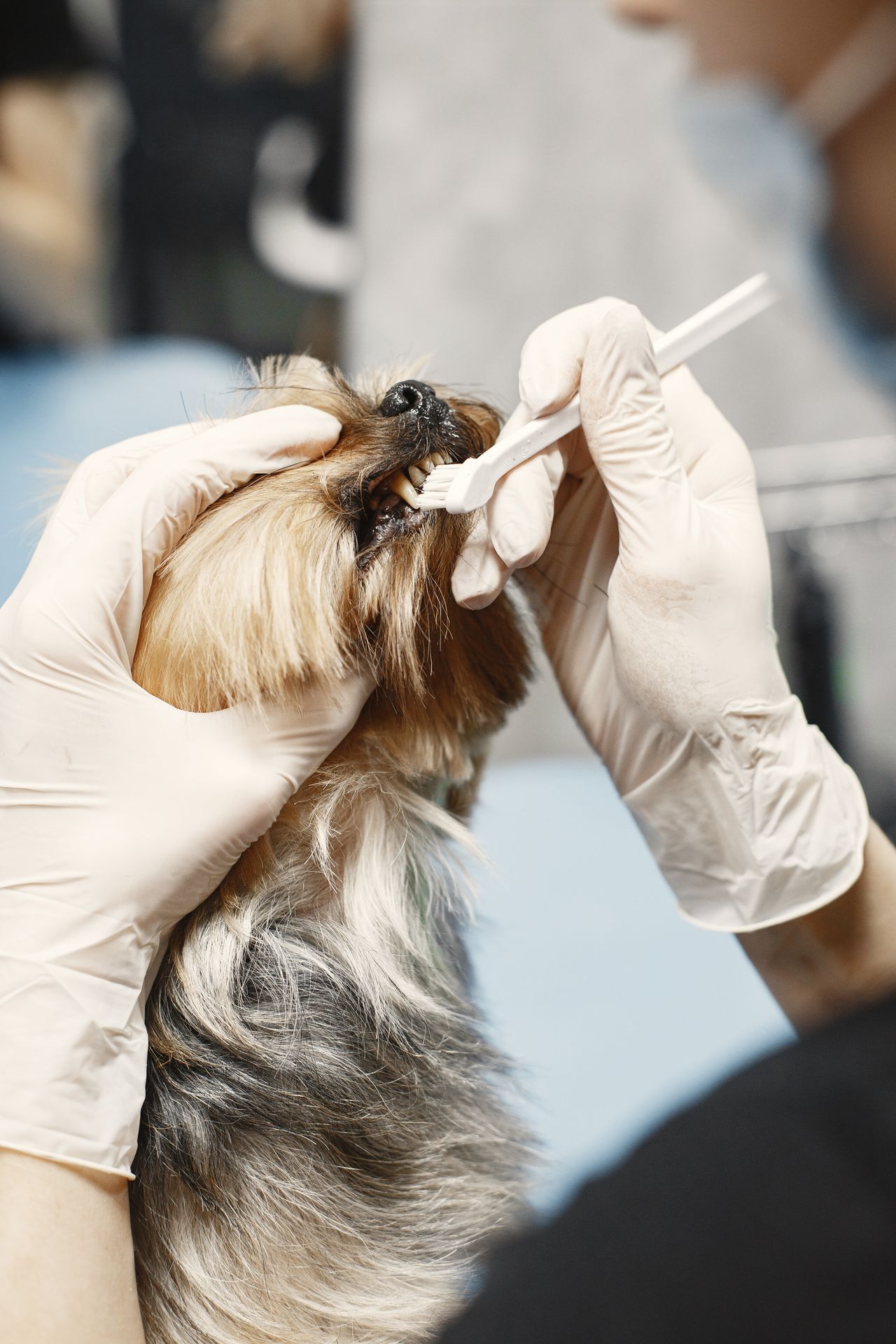
Picture an evening beside the sofa: a toothbrush is ready on the table, the dog turns their head away, and the person holding the brush wants to get just one useful stroke done before giving up. I understand that urge to finish a necessary job. But I would put the brush down long enough to ask whether we have made the next step clear and comfortable, or merely brought the equipment closer.
My starting point is the mouth’s health. PDSA notes that dogs may continue eating despite oral pain; difficulty with handling deserves attention rather than an assumption of stubbornness. After appropriate veterinary advice, I would build the household routine around small actions we can describe accurately. That means separating learning to accept care from treating disease, and replacing the vague promise to try harder with a usable plan.
Bad breath, red or bleeding gums, a broken tooth, unusual drooling, difficulty eating or a change in chewing deserve veterinary advice. The fact that a dog still eats does not rule out a painful mouth. PDSA advises urgent attention if a dog cannot close the mouth or is too painful to eat. Do not use a training plan to delay assessment while waiting for the dog to become more cooperative.
If the dog has recently had dental treatment, follow the clinic’s specific instructions about when and how home care should resume. Do not begin brushing a healing area because a general article recommends a daily routine. Ask the team to explain the current goal and demonstrate suitable handling when appropriate. That separates necessary medical care from the learning steps the household can safely practice at home.
Use a toothpaste intended for dogs and suitable for the individual animal. Human toothpaste and household substitutes such as baking soda are not appropriate. Ask the veterinary team about a brush that fits the dog’s mouth and the person’s ability to handle it gently. A large brush that is awkward to position can make a simple movement unnecessarily difficult, while a complicated design may be less useful than one the person can control comfortably.
Keep the items together in a clean, accessible place, away from pets and children when not in use. Read product directions and consider any dietary restrictions with the veterinary team. The goal is not to assemble a large collection of dental accessories. It is to choose a small set of appropriate tools and know what each is for before the dog has to wait while somebody searches through a bathroom drawer.
I would start by moving the exercise away from the narrow gap beside the sofa. A stable, comfortable position at ground level, or another safe arrangement recommended for this dog, gives the person less reason to lean across the animal. Other pets and children can be elsewhere. Before lifting the brush, I would check my own position: are my knees blocking the way out? The arrangement should let the dog leave. A quiet setting cannot guarantee comfort, but it can remove the extra difficulty of balancing, being crowded or anticipating restraint.
Prepare a suitable reward and begin with a step the dog can manage comfortably. That may be noticing the equipment or accepting brief gentle contact near the mouth, depending on the individual and the veterinary advice. Do not rush from investigation to a full-mouth brushing simply because the first moment went well. A predictable small step gives the next session a better starting point than a surprise escalation.
The flavor of a suitable toothpaste, gentle mouth-area handling and contact with a brush are different experiences. Introduce them gradually rather than presenting the complete procedure at once. PDSA and VCA describe a progressive approach in which comfortable handling comes before more demanding brushing. Ask the veterinary team to demonstrate the technique for your dog so the household does not have to guess at pressure or position.
For a simple practice example, the dog may first investigate the equipment and taste the appropriate product according to its directions. Another manageable step might involve a brief comfortable lift of the lip or gentle contact with a few outer tooth surfaces, as demonstrated by the clinic. The point is not to complete every stage in one sitting. If the dog turns away, becomes tense or tries to leave, pause and make the next attempt easier.
Once the dog is comfortable with the preceding steps, develop brushing gradually toward the routine recommended by the veterinary team. VCA emphasizes gentle work on the outer tooth surfaces and warns against accidentally poking the gums. Avoid forcing the mouth open or reaching farther simply to finish a checklist. A brief successful action can be a useful stage while the animal learns what the tool feels like.
The note I want beside the kit is more precise than a tick marked teeth done. If the dog accepts brief contact on the outer front teeth and remains nearby, that is what I would record, including the tool and side reached. If they turn away before contact, the record should say that instead. Next time, someone else can begin from the actual comfortable step rather than assume the whole mouth was brushed. Learning and effective ongoing dental care both matter; an honest small entry helps us see where each still needs support.
| Current comfortable step | Possible next small change | Reason to stop |
|---|---|---|
| Equipment nearby | Suitable toothpaste introduction | Concern or avoidance increases |
| Gentle mouth-area touch | Brief demonstrated outer-surface contact | Pain, tension or attempts to leave |
| A few comfortable strokes | Gradual appropriate coverage | New sensitivity or risk to the person |
A pause should give the dog relief from the handling, not become a moment to reposition the grip and continue the same difficult action. Put the brush still, allow space and consider why the step was too much. The person may have changed pressure, reached a sensitive area or extended the session beyond the dog’s comfort. New or localized sensitivity needs veterinary attention rather than repeated testing to identify exactly how much contact is tolerated.
Do not use food to keep the dog occupied while someone forces access to the mouth. Rewards should support manageable learning, not conceal a struggle. Growling, snapping or a risk of being bitten means the household needs a safer individual plan. Stop the handling and contact the veterinary team. The aim of home care is not to prove that a determined owner can complete the task regardless of the animal’s response.
If several caregivers will brush, agree on the demonstrated technique and the current comfortable stage. A dog who accepts one person’s brief contact may not be ready for a different person to attempt a longer session. Show the new caregiver the setup and begin conservatively. Keep the equipment identifiable and use a separate toothbrush for each dog, with cleaning and replacement according to appropriate guidance.
A short note can say what was completed and what needs attention, without making the household competitive about coverage. Avoid a situation in which the second person repeats the whole routine because they did not know the first had already tried it. Consistency is useful when it makes the care predictable. It is less useful when it turns into an insistence that the same amount must be done every night despite pain, illness or a change in the veterinary plan.
Some dogs cannot comfortably tolerate brushing despite gradual appropriate work. PDSA advises owners not to put themselves at risk and to discuss other dental-care options. Ask the veterinarian what may be suitable for the individual dog, including how any dental product fits the broader plan. A chew, food or additive should not be assumed to replace examination or treatment of an existing problem because the package uses dental language.
If a chew is recommended, consider suitability, supervision and its contribution to the feeding plan. Avoid improvising with very hard items or attempting to scrape tartar at home. The household’s job is to follow an appropriate preventive routine and notice changes, while the veterinary team assesses disease and treatment. A realistic alternative plan is more useful than repeatedly restarting a brushing battle that nobody can carry out safely.
At the next relevant veterinary conversation, I would bring that small record rather than try to reconstruct several evenings from memory. The useful questions are whether our current routine meets the dental goal, what needs attention professionally, and which handling step is sensible next. A clean-looking front tooth cannot answer those questions for the whole mouth. If the response has changed, I would describe the change specifically. The point is to leave with a clearer plan for the dog beside the sofa, not a more impressive claim about how much brushing we accomplished.
The useful progress is twofold: the household can carry out appropriate care, and the dog can participate without a struggle. If only one is improving, the plan needs adjustment. Keep the routine modest, clear and connected to veterinary advice. A daily habit becomes sustainable through preparation and comfortable repetition, not through making each evening a contest between the importance of dental health and the dog’s attempt to avoid handling.
Back beside the sofa, I would rather see the brush put away after a comfortable, accurately recorded step than see the household force a finish. The record does not replace dental care; it makes the next conversation and next attempt more useful. Begin with health, keep an exit available, and let the plan fit what this dog can comfortably learn.
A: No. Use a suitable dog toothpaste and follow the product and veterinary guidance. Human toothpaste is not intended to be swallowed by dogs and may contain unsuitable or harmful ingredients. Do not substitute baking soda or other household products.
A: No. PDSA notes that dogs may keep eating despite dental pain. Changes such as bad breath, bleeding gums, broken teeth, drooling or altered chewing need veterinary advice. A dog too painful to eat or unable to close the mouth needs urgent attention.
A: Do not force the mouth open or continue through resistance. Ask the veterinary team to demonstrate an appropriate gentle technique and build manageable steps. The routine should not put the dog or person at risk, and difficult handling may need an individual plan.
A: Ask your veterinarian what fits the individual dog’s care plan. A dental product is not a substitute for assessment or treatment of disease, and not every item suits every animal. Count edible products within the feeding plan and supervise their use as advised.
A: Stop and keep everyone safe. Do not punish the warning or keep trying to complete the session. Contact the veterinary team to assess possible pain and discuss a safer care and behavior plan. The next step may be professional help rather than a smaller version of the same struggle.
Reference details checked Nov 10, 2026. Rules and guidance can change; follow the current source where applicable.
Something needs a correction? Let us know.
Add up walks, training and chews with worked label arithmetic, then give every caregiver the same daily plan.
Keep batch details attached to the food and give each refill a clean start, from cupboard to bowl.
Turn uncertain memories into a clear timeline, three useful questions and a follow-up plan the household can use.