Keep the pet-food bag inside the bin
Keep batch details attached to the food and give each refill a clean start, from cupboard to bowl.
The morning walker gives a reward, someone shares a snack at lunch, and another person fills a food toy in the evening. Nobody thinks they have offered very much. The difficulty is that each person is counting a different part of the day.
My starting point is the daily total, before debating which treat is best. PDSA recommends limiting treats within a dog’s daily food allowance, while AAFCO explains that most treats are not intended to provide complete nutrition. The right total intake and any dietary restrictions belong in a conversation with your veterinary team. Once those decisions are made, a simple household system can stop several small rewards becoming one unplanned extra meal.
Start with a day’s routine: walks, medication administration, training, chews, food toys and table scraps. Include items that seem too small to count. The purpose is a useful inventory, not a household argument about who is responsible for the pet’s weight.
A simple note beside the feeding area can name the activity and the person. Two training sessions and a sitter’s visit might explain why the packet empties quickly. A medication-related snack belongs on the list too: do not alter prescribed medication or stop giving it, but ask the veterinary team how to account for the food used with it. The aim is coordination, not blame.
A label may express energy per item, per gram or per package. Check which quantity the number describes before multiplying. AAFCO distinguishes treat products from complete-and-balanced main foods, so a product being marketed for pets does not mean it can freely replace the regular diet.
Using sample label figures, a product with 4 kcal per piece contributes 20 kcal when five pieces are given. A second product with 10 kcal per piece contributes 20 kcal in two pieces. Counting two versus five without reading the labels would give the wrong comparison. The unit is doing as much work as the number.
Ask the veterinary team what total daily intake and allowance for extras fit your pet. Their advice may depend on age, body condition, activity, health and the main food. Pets on an elimination diet or therapeutic diet may have restrictions that a general treat rule cannot capture.
PDSA describes setting aside part of a dog’s normal food for rewards. That can help coordinate training without simply adding another meal’s worth of extras. Discuss adjustments to the main ration with the team rather than reducing essential nutrition arbitrarily or assuming every pet can use the same food rewards.
Now suppose a veterinary team has agreed a daily allowance of 40 kcal for extras for one dog. This is a worked example, not a suggested allowance for your pet. The morning walker gives three rewards at 4 kcal each, the sitter gives four at 3 kcal each, and someone plans a chew containing 30 kcal.
The first two activities total 24 kcal: 12 from the walker and 12 from the sitter. Adding the chew brings the day to 54 kcal, which is 14 kcal above the agreed example allowance. No individual portion looked like much. The mismatch only becomes visible when the household adds the activities together, with the correct calorie unit for each product.
The answer is to agree the day’s allocation before giving the food, not to skip a later meal or improvise a ration reduction after the fact. The veterinary plan can explain how rewards and any suitable portions of the main food fit together. A chew need not become a daily obligation simply because the family bought a multipack; product suitability and feeding directions still matter.
| Example item | Label arithmetic | Energy in this example |
|---|---|---|
| Morning rewards | 3 pieces × 4 kcal | 12 kcal |
| Sitter rewards | 4 pieces × 3 kcal | 12 kcal |
| Planned chew | 1 chew × 30 kcal | 30 kcal |
| Whole day | 12 + 12 + 30 | 54 kcal: 14 above the example allowance |
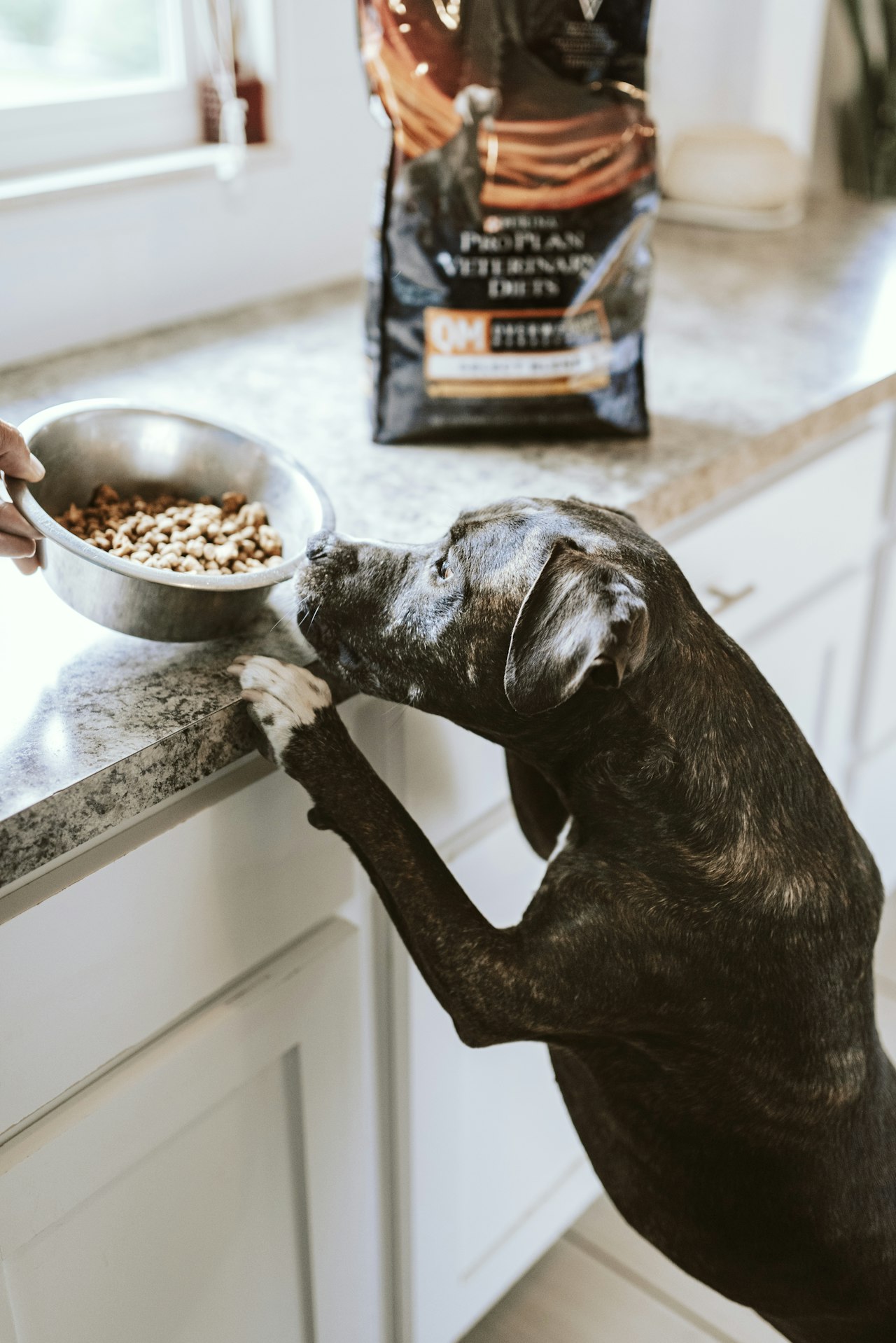
Once the plan is agreed, put the day’s permitted rewards in one clearly labeled container where pets and children cannot help themselves. Anyone giving a reward takes it from that allocation. Keep food labels and ingredient information available rather than mixing unidentified products in a jar.
For the shared household plan, the morning walker takes a portion and leaves the rest for the sitter and evening practice. A small written note accounts for a planned chew that cannot go in the same pot. The system should make the amount easier to see, not encourage finishing everything because it is there.
Make handovers explicit. Before a sitter arrives, say whether their portion is still in the container or has been taken out for the walk. A note reading evening training reserved is clearer than assuming everyone knows why food remains. Keep separate allocations for different pets, especially when one has a prescribed diet. A convenient shared jar should never erase those differences.
A new flavor, size or product can change the calculation even when the treats look similar. Read the current package rather than carrying forward a figure from the previous bag. If the label gives energy per kilogram, divide by one thousand to obtain energy per gram, then multiply by the measured amount offered. Ask the manufacturer when the unit or portion weight is unclear. The calculation only becomes meaningful when the number and the actual food refer to the same thing.
For example, a sample label of 3,000 kcal per kilogram means 3 kcal per gram. A measured 5-gram portion therefore contributes 15 kcal. This is a unit conversion, not a feeding target. A piece count is easier when a reliable per-piece figure is available, but breaking a treat into several pieces does not remove its calories. Smaller suitable pieces may offer more opportunities to reward from the same allocation; whether that food and size are appropriate still depends on the individual pet.
Keep the packaging until the product is finished, especially when different caregivers use the same allocation. A handwritten note that says four treats is incomplete if three packets are in the cupboard. Use the product name and the relevant unit. There is no need to build a complicated spreadsheet for ordinary coordination, but the system should be clear enough that a sitter can follow it without guessing which item the household meant.
Some days naturally contain more reward opportunities: a training class, a visitor, a longer care routine or a sitter learning the household habits. Plan those activities together. If food rewards are needed in several situations, discuss with the veterinary team how suitable portions of the normal ration and permitted extras can be allocated. Do not solve the conflict by cutting a meal arbitrarily or making necessary handling more difficult because the shared pot was used up earlier.
A quick morning handover can prevent most confusion. Identify what is reserved, what has been taken on a walk and whether a planned chew is included. At the end of the day, an unused portion does not have to be given simply to empty the container. The allocation is a limit within the agreed plan, not a performance target. Likewise, a day that exceeds the plan is information to review, not a reason to punish the pet or skip prescribed food and medication.
Watch the pet as well as the tally. Changes in appetite, weight, comfort or willingness to engage deserve veterinary attention rather than an assumption that the household has been careless. A record of products and amounts can help that conversation, but it cannot establish a diagnosis. The most useful result is a feeding routine the family can understand and the veterinary team can adjust when the animal’s needs change.
Food is useful, but some animals also value play, access to a safe sniffing opportunity or attention they actively enjoy. Choose rewards that suit the individual and the situation. A cuddle is not a reward for a pet who wants space, and an exciting game may not fit a quiet practice session.
Review the plan when the food, activity or health situation changes. Weight and body condition should be assessed with veterinary guidance. An appetite change or weight change should not automatically be attributed to secret treats; it may need a health check rather than a stricter kitchen rule.
The most useful treat container contains a shared decision as well as food. Everyone knows what has been allocated, what has already been given and what belongs in the main ration. That makes rewards easier to coordinate while keeping nutritional decisions with the people qualified to personalize them.
A: No. It is a general upper-limit concept for extras, not a requirement to give that amount. Your veterinarian may recommend a different or more restricted plan.
A: If consumed, they can contribute calories. Check the product information and include them when discussing the full diet with your veterinarian.
A: Often it can, if it suits the pet and training situation. Allocate it from the agreed daily ration rather than adding it without counting.
A: Divide the kcal-per-kilogram figure by 1,000 to get kcal per gram, then multiply by the measured grams offered. Ask the manufacturer for clarification or a reliable per-item value if weighing individual portions is impractical. Do not use an estimated handful or a remembered figure from a different product. The total allowance still needs to fit the veterinary feeding plan.
A: Use it to improve record-keeping. Weight management and calorie targets should be planned with your veterinary team, especially when health conditions are involved.
Reference details checked Nov 10, 2026. Rules and guidance can change; follow the current source where applicable.
Something needs a correction? Let us know.
Keep batch details attached to the food and give each refill a clean start, from cupboard to bowl.
Turn uncertain memories into a clear timeline, three useful questions and a follow-up plan the household can use.
Turn the daily routine into clear actions, useful observations and a backup plan someone else can follow.