One treat budget for the whole household
Add up walks, training and chews with worked label arithmetic, then give every caregiver the same daily plan.
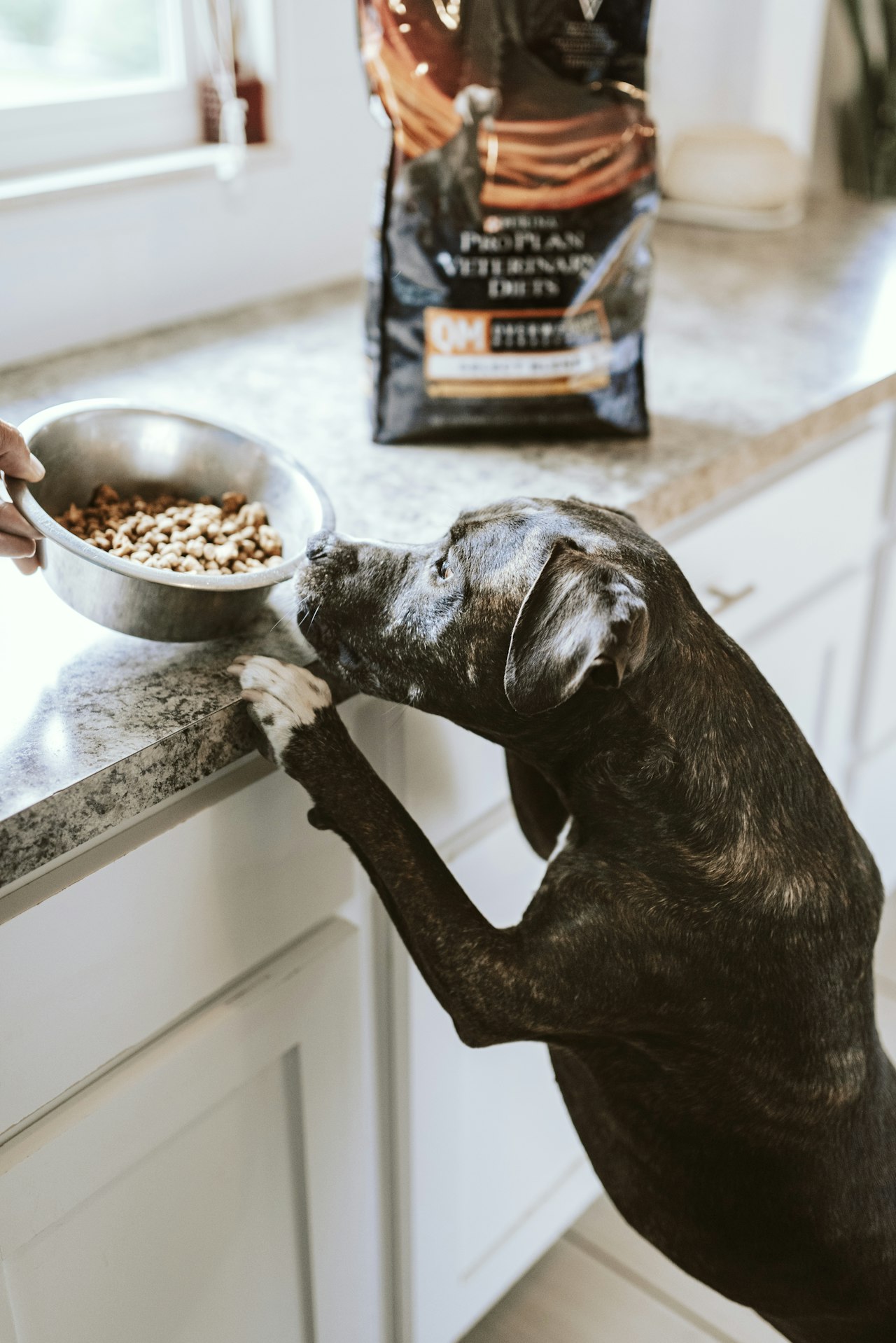
A storage bin can make pet food look organized while removing the information you may later need. Imagine opening a large bag, pouring everything into a decorative container and throwing the packaging away. The cupboard is neater, but the batch number, expiry information and exact product name have disappeared.
The FDA recommends keeping pet food in its original packaging, including placing the whole dry-food bag inside a storage container when possible. I like this approach because it solves two household jobs together: managing the food and keeping its identity attached. The rest of the station can be built around that simple choice.
Product name, manufacturer, lot or batch number and best-before information are useful if a recall or problem occurs. A photograph can be a helpful backup, but keeping the bag with the food reduces the chance of confusing one purchase with another. Make the label easy to reach.
In that cupboard, the bag goes into a suitable lidded bin without being emptied. The label remains visible when the lid is opened. This also makes it easier for a sitter to confirm they are using the correct food rather than relying on two similar containers labeled only dog and cat.
A bin beside a hot appliance or in a damp utility area may be convenient but inappropriate. FDA storage guidance calls for a cool, dry location and secure access. Follow any more specific instructions on the product, especially for foods that need refrigeration or freezing.
My practical check is to visit the proposed shelf at different times of day. Does it receive direct sun? Is there a leak nearby? Can the animal open the door? These are questions about the home, not features a retailer’s product listing can answer. A secure cupboard may matter more than a decorative finish.
Repeatedly pouring a new bag over old crumbs creates a container with an unclear history. The FDA advises washing and drying storage containers between bags. A reset gives the next batch a clean start and a clear connection to its own label.
A workable routine is to plan the cleaning before the last portion is used. Keep the food protected while the container dries completely. If several people feed the pet, a simple refill note prevents someone from filling a still-damp bin or combining products that were supposed to remain separate.
Picture the last portion of one bag and a new bag waiting beside the cupboard. This is the moment when a simple station can become confusing: one person tips the new food in, another keeps an old label, and nobody knows which batch a later meal came from. Give the handover a clear end and beginning. Finish the previous supply, clean and dry the container, then place the new bag and its own information together.
A photograph should show the identifying panel clearly enough to read later. Include the product name as well as the lot and date; a close-up of an isolated number may be difficult to connect with the correct bag. Store the image where the household can find it. A folder named pet food is more useful than an unlabelled photograph buried between holiday pictures and receipts.
Imagine a product alert appears the following week. With the current bag available, you can compare the exact product and identifying details with the official notice or ask the manufacturer for help. Without it, a memory of the bag’s colour may leave uncertainty. Do not decide a product is safe from resemblance alone, and follow the recall instructions if your product is affected.
| Keep with the current supply | Why it is useful | Common mix-up |
|---|---|---|
| Exact product name and manufacturer | Identifies what the household bought | Similar-looking foods for different pets |
| Lot number and best-by date | Helps match an alert or report a problem | Retaining the previous bag’s details |
| Opening or refill note | Helps people follow the same routine | Assuming another person already reset the bin |
Dry-food storage habits should not be carried over to an opened pouch or can. Prompt refrigeration or disposal and the product’s instructions matter. FDA guidance sets refrigerator temperature at 40°F or below, about 4°C, and advises prompt handling of unused wet food.
When two people share feeding, a dated cover or label can show when a pouch was opened and which pet it belongs to. That note does not extend the product’s safe storage period. It simply makes the manufacturer’s instructions easier for both people to follow without relying on memory.
Place the opened-food note where it will be seen at the next meal, not on the outside of a bin holding unrelated dry food. If the instructions cannot be read because the outer packaging was discarded, contact the manufacturer rather than borrow a storage period from a different product. The label system should make uncertainty obvious; it should not make a guessed date look authoritative.
The feeding station has to communicate without the usual person standing beside it. Put the current product, measuring tool and written feeding instructions in a clear relationship. If a dog and a cat use different foods, separate the supplies and label them with the animal’s name. A container marked pet food is not enough when one animal has a prescribed diet or several similar packages are stored together. Keep the instructions current when the veterinary feeding plan changes.
Ask a sitter to walk through one ordinary meal before you leave. Can they identify the correct bag, find the amount and see what to do with unused wet food? The demonstration may reveal that the scoop has no readable markings or that the opening date is hidden beneath a cover. Fix those small ambiguities at home rather than expecting the sitter to resolve them by message while you are unavailable. The point is a reliable routine, not a test of their memory.
Keep cleaning and storage responsibilities explicit as well. If one person washes the bin and another refills it, both need to know it must be completely dry. If the household shares measuring tools between products, consider how dietary restrictions and hygiene will be handled with professional advice where needed. A simple arrangement is easier to maintain than one that depends on remembering several unwritten exceptions every time a meal is prepared.
If something about the food or packaging seems wrong, stop using that supply while you seek advice. Keep the identifying information and note when the product was opened and what was observed. A photograph of damaged packaging or an unusual appearance may help the manufacturer understand the report, but do not expose anyone to a suspected hazard just to improve the evidence. If the pet is unwell, contact the veterinarian promptly and follow their advice about urgency.
Separate the question of what happened from a premature conclusion about why. The pet becoming ill after eating a food is important information, but timing alone does not establish the cause. Give the veterinarian the product details, relevant feeding history and symptoms. The manufacturer may need the lot number and best-by date to investigate. This is where retaining the bag pays off: the household can provide specifics instead of trying to identify a batch from the color of an empty storage bin.
Follow any official recall or manufacturer instructions for the particular product. Do not assume that another bag is affected or unaffected because it looks similar, and do not feed a suspect product to a different animal to avoid waste. Keep reporting information accessible and record whom you contacted. The practical aim is to protect the animals and make the concern understandable, while leaving medical assessment and product investigation to the appropriate professionals.
A clean bin does not make a dirty scoop irrelevant. FDA guidance calls for washing and drying food bowls and measuring utensils after use, keeping those utensils dedicated to pet food, and washing water bowls daily. CDC also emphasizes hand hygiene around pet food and feeding equipment. Ordinary-looking food still needs careful handling.
Keep measuring tools dedicated to pet food, and do not let pets reach the supply while meals are being prepared. If a product looks spoiled, has damaged or swollen packaging, or seems connected to illness, stop using it and contact your veterinarian and the manufacturer. Preserve identifying details for any report.
The next refill is a good time to reset the feeding station. Keep the bag, choose a suitable location and make room for clean measuring tools. The result can still look orderly, but it will also preserve the information and everyday habits that make the setup useful.
A: The FDA prefers retaining the original bag, including placing it inside a suitable bin. If you need to decant, use a clean, completely dry container with a secure lid and retain the complete information from the current package. Replace the saved label details when the product changes, and avoid mixing old and new batches.
A: It is a useful backup, especially if it clearly includes the lot number and date. Keeping the original packaging with the food makes mix-ups less likely.
A: Avoid building up old residue beneath new food. Finish the previous batch, then wash and fully dry the container before refilling.
A: Keep different diets clearly identified and separated. Mixing foods makes feeding instructions, dietary restrictions and batch information difficult to track.
A: Do not feed a suspect product. Keep the packaging, contact the manufacturer and seek veterinary advice if your pet has eaten it or is unwell.
Reference details checked Nov 10, 2026. Rules and guidance can change; follow the current source where applicable.
Something needs a correction? Let us know.
Add up walks, training and chews with worked label arithmetic, then give every caregiver the same daily plan.
Turn uncertain memories into a clear timeline, three useful questions and a follow-up plan the household can use.
Turn the daily routine into clear actions, useful observations and a backup plan someone else can follow.