A litter tray location audit, from the cat’s height
Compare routes, noise and everyday access to find the barriers a tidy-looking litter corner can hide.
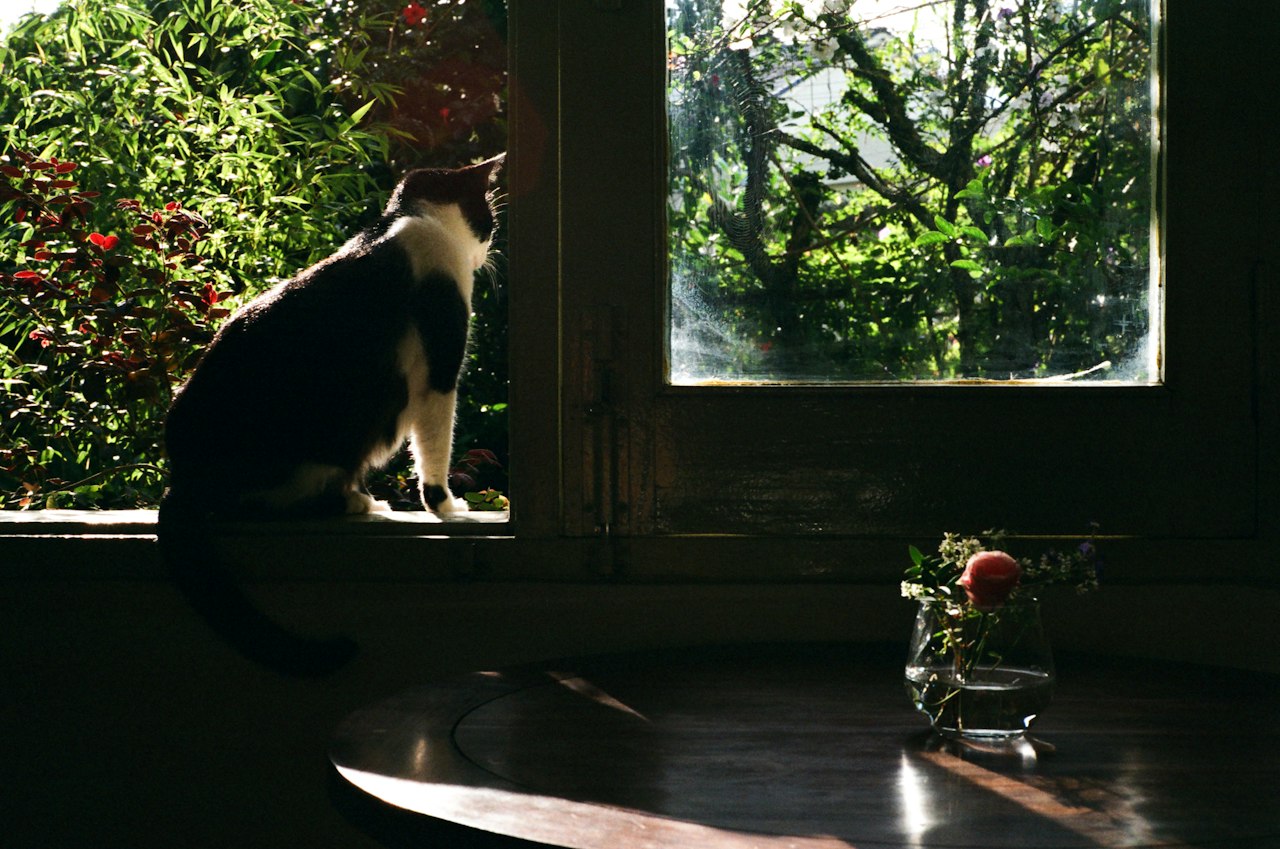
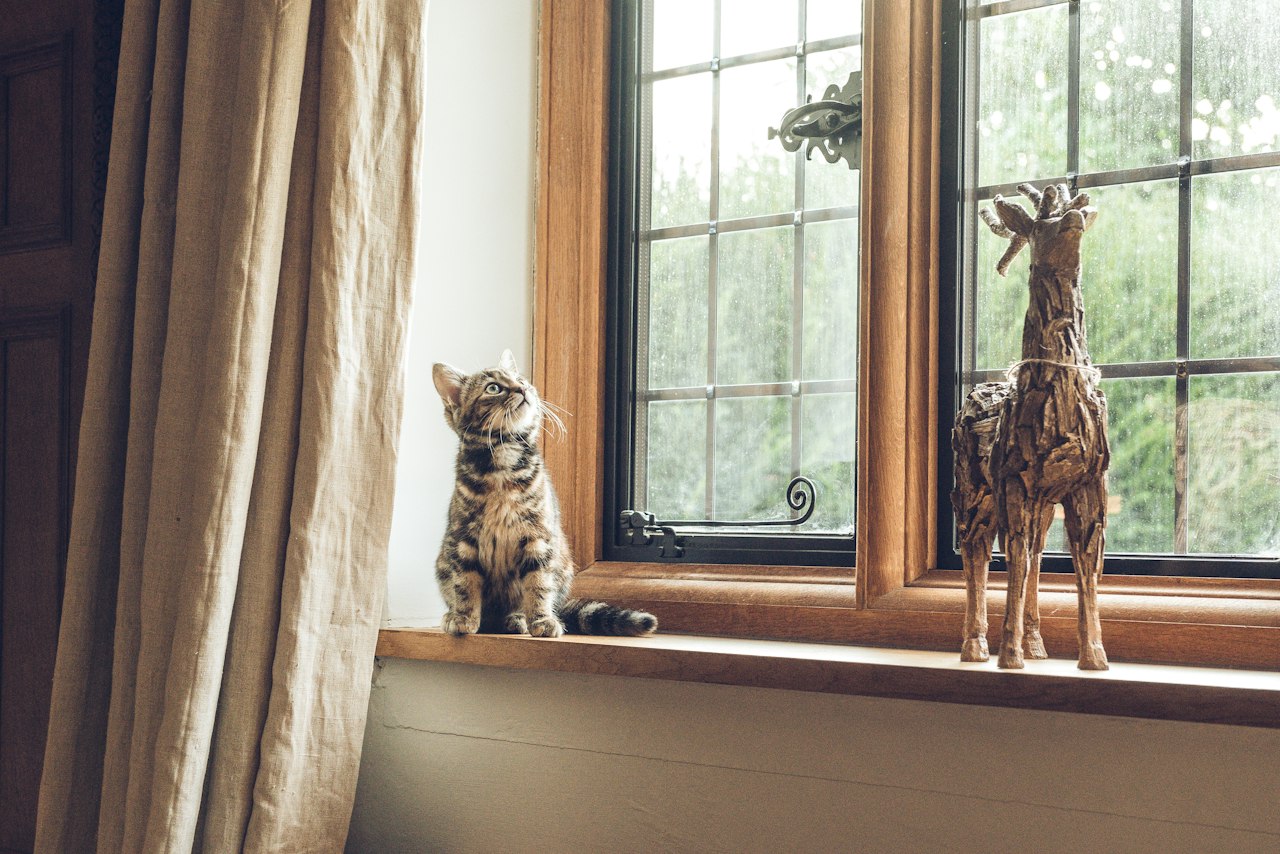
Consider a sunny window with a perch above a low chair. In this example, the chair supplies the easy step between floor and seat—until a guest pulls it across the room. The perch has not moved, yet the route has changed. That is the detail I would want to catch before describing the arrangement as finished. A comfortable lookout includes the journey down as well as the place to sit.
My eye may go to the view first, but my checks begin with the window and support. Cats Protection warns about open-window falls and tilt-window entrapment; the product’s installation requirements also need to be met. Once those basics are secure, I would follow the route through the room and ask which parts will still be there after guests, cleaning and ordinary household use.
Look at how the window operates, who opens it and whether the cat could reach an unsafe gap. An ordinary insect screen should not be assumed to restrain a cat. Cats Protection recommends appropriate secure screening and warns that tilt windows can trap animals. Keep the window safely closed or use a properly fitted system designed for the purpose. If you are unsure whether a setup is suitable, get qualified advice rather than testing it with the cat.
Include the daily routine in the check. Someone may open the window to air the room, move a screen for cleaning or leave a balcony door ajar. A perch that brings the cat directly to the opening makes those habits especially important. Explain the arrangement to everyone in the household and to caregivers. The safety system needs to work during an ordinary warm afternoon, not only while the person who installed it is watching.
Read the installation instructions and stated limits for the actual product. Check the surface or structure it is intended to attach to, the required fittings and how inspection should be carried out. Do not substitute improvised fasteners or assume a different window material is equivalent. A wall-mounted shelf and a suction-mounted perch create different installation questions; the article cannot supply a universal load rating or fastening method for every home.
If using existing furniture, check stability, the surface available and whether it can shift or tip. A narrow decorative shelf may look inviting but offer little room to turn. Avoid placing a perch above fragile objects or a hazardous landing area. The cat should not become the load test. An uncertain support needs correction or a different option before access is offered, with professional help where the installation requires it.
I would trace the route with my eyes before asking the cat to explore it: floor, stable intermediate surface, perch, then the same journey back. That chair catches my attention because it looks permanent only until someone needs a seat. I would choose access that stays reliably available and suits the individual cat’s mobility, with appropriate stable intermediate support where needed. Another cat’s easy jump would not settle the question for me. The useful route is the one this animal can comfortably use in both directions.
For a simple room example, a stable low piece of furniture may provide a useful intermediate point beside a suitable perch. That only helps if it remains in position and does not block a doorway. If the household regularly moves it, choose a route that does not depend on it. New difficulty jumping, hesitation or changes in movement should be discussed with the veterinary team rather than solved by encouraging a bigger leap.
A resting surface needs room for the cat to adjust position and leave without feeling wedged between a curtain and the glass. Keep cords and loose fabric away from the access route. Check that opening curtains does not knock the perch or sweep objects into the cat’s space. A beautiful photograph of a cat on a narrow sill does not show whether the position remains comfortable through the rest of the day.
Offer another resting place away from the window. Sun, temperature, noise and activity outside can change, and a cat should be able to choose a different spot. The window seat does not need to be the only elevated option in the home. RSPCA guidance supports appropriate places to climb and rest; that principle is about usable choice, not making the highest or brightest position compulsory.
Suppose the choices are a freestanding cat tree near the window, a properly installed wall perch or a broad stable piece of furniture. Compare the whole arrangement rather than the product label. The tree may offer several levels but need a secure footprint. The wall perch may save floor space but require appropriate installation and an accessible descent. Furniture may be familiar but unsuitable if it moves whenever the room is cleaned.
At the comparison stage, I would put the pretty high option beside a lower, less conspicuous one on paper and list what each actually needs. Secure support, a safe window, enough space and a dependable way down come before color. If the high seat depends on the borrowed chair remaining untouched, I would reconsider it. A lower suitable lookout may preserve the view while making ordinary use simpler. If neither option can meet the safety requirements, I would leave this window without a perch rather than turn the room into a compromise.
| Option | Check first | Possible limitation |
|---|---|---|
| Freestanding tree | Stable assembly and clear floor space | May dominate a narrow route |
| Wall-mounted perch | Suitable structure and correct installation | Needs a practical descent |
| Existing furniture | Stability, surface and permanent position | May be moved during ordinary use |
Let the cat investigate voluntarily. A familiar item of suitable bedding may help make the surface recognizable, provided it does not slip or interfere with the product. Keep the route clear and avoid lifting the cat onto the perch to demonstrate the view. Being able to choose the ascent and descent provides more useful information than seeing the animal remain where a person has placed them.
Watch ordinary use from a distance. Does the cat approach, turn and leave without difficulty? Does the access furniture stay in place? A successful first rest is only the beginning of checking how the arrangement works. If the cat avoids it, consider the surface, location and route rather than repeatedly moving them back. The household can keep a familiar resting option while deciding whether the new one is genuinely useful.
A window can provide interest, but the view is not automatically relaxing. Another cat outside, frequent noise or intense activity may change how the indoor cat uses the area. Observe the actual response rather than assuming more visual stimulation is always better. If the cat repeatedly appears distressed around the window, reduce access to that trigger and seek advice about the broader situation when needed.
Curtains or other safe arrangements may help manage the view, but avoid creating entanglement or blocking ventilation required by a product. Keep an alternative resting place available. A cat who chooses a quieter room has not failed to appreciate the new perch. The purpose is to offer a useful option, so the cat’s pattern of use should guide whether the location remains appropriate.
With several cats, the route matters as much as the number of seats. One cat positioned on the only lower step may prevent another from leaving or approaching. Multiple suitable destinations and routes can offer more choice than one large structure in a narrow corner. Watch for waiting and avoidance as well as chasing. A quiet room can still contain competition that is easy for people to miss.
Do not force the cats to share the perch to encourage friendship. Provide separate resting options and protect access to other resources. If tension is persistent, involve your veterinarian and ask about qualified behavior support. The perch is one part of the environment; it cannot resolve a wider conflict by being larger or more expensive. An arrangement that lets each animal withdraw is more useful than one that produces a crowded photograph.
The next time the room is cleaned or prepared for visitors, I would check the route again, including the chair-sized gap that started this example. I would also inspect the support, fittings and surface as the manufacturer directs, replacing damaged components appropriately rather than improvising a repair. Laundry and decorations should not gradually occupy the landing space. The useful maintenance question is not simply whether the perch remains attached; it is whether the whole arrangement still offers the same safe, usable access we originally intended.
If a cat falls from a height or is injured, contact a veterinarian promptly even if they appear able to move afterward. Do not treat a return to the perch as proof that no harm occurred. For everyday prevention, keep the window arrangement reliable and the support verifiable. A good lookout remains useful because the people maintain the route and the boundary, while the cat remains free to choose whether to use it.
I would call this project complete only when the view, support and return route work together through an ordinary day. The moved chair is a useful reminder: a small household change can alter a cat’s choices without changing the product at all. Keep the window secure, maintain the installation and let the cat decide whether the finished lookout deserves a place in its routine.
A: Do not assume an ordinary insect screen is designed to contain a cat. Keep the window safely closed or use an appropriate properly fitted system intended for that purpose. Check the product and installation guidance, and get qualified advice if the arrangement is uncertain.
A: No. Stable support, usable space and a comfortable route up and down matter more than height. Consider the individual cat’s mobility and provide alternatives. A lower lookout that is easy to use can be more practical than a high seat with an awkward descent.
A: Let the cat investigate voluntarily rather than placing them where they must work out an unfamiliar exit. Keep a safe route and familiar resting options available. If the perch is ignored, assess the location and surface instead of repeatedly putting the cat back.
A: Discuss a new or persistent change in movement with your veterinarian. Do not assume the cat is simply bored with the perch or encourage a more difficult jump. Keep accessible resting options available while the cause is assessed.
A: They may choose to, but shared access should not be compulsory. Watch whether one cat blocks the route or another waits to approach. Separate resting destinations and suitable routes give more choice than assuming a single large structure meets every cat’s needs.
Reference details checked Nov 10, 2026. Rules and guidance can change; follow the current source where applicable.
Something needs a correction? Let us know.
Compare routes, noise and everyday access to find the barriers a tidy-looking litter corner can hide.
Clear a route to food, water and the tray, reduce repeated visits, and know which changes need a veterinary call.
Use the marks on the sofa to choose a stable surface, a useful position and one change worth testing.