A litter tray location audit, from the cat’s height
Compare routes, noise and everyday access to find the barriers a tidy-looking litter corner can hide.
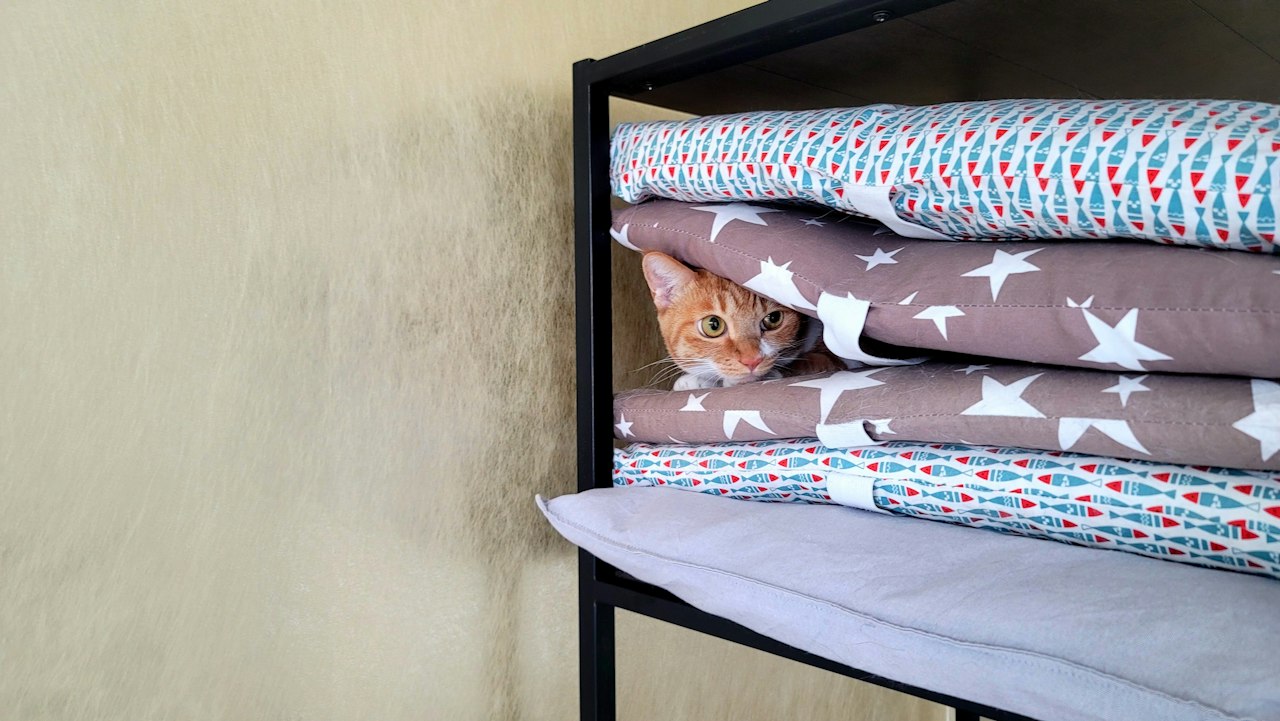
Picture a newly arrived cat behind a sofa while three well-meaning people take turns checking whether they have come out. Someone kneels to look underneath; another shakes a toy; a third offers a hand. Each visit is intended as reassurance. From the cat’s position, however, the quiet interval keeps ending. My first change would be to the traffic around the hiding place.
Hiding can be a coping behavior, but a new or persistent change can also accompany illness or pain. Cats Protection advises veterinary assessment when a cat begins hiding more. Concerns about eating, drinking or toileting deserve prompt advice; breathing difficulty or inability to urinate requires urgent care. Quiet surroundings do not replace medical attention.
A covered bed, stable box or suitable elevated place can provide privacy. A hole behind an appliance, a loose mechanism inside a recliner or access to an escape route is a different matter. Before a new cat arrives, identify those hazards and make the room safe.
Offer a deliberate retreat before trying to restrict an unsafe gap, so the cat still has somewhere to withdraw. If the animal is trapped or at risk, ask the rescue or veterinary team how to help safely. Avoid dismantling furniture or reaching blindly around a frightened cat. Never operate a reclining mechanism when a cat may be inside or underneath it.
Food, water and a litter tray should remain reachable, but not packed into the hiding space itself. Cats Protection recommends resources nearby without placing them directly in or beside the refuge. The cat needs the option of emerging to use the room.
In the sofa room, sketch a simple route to each resource and clear bags or cables from it. The arrangement should still work overnight when the household is quiet. Another pet should not be able to camp in the only passage and make the route unusable. Check that the person filling bowls can do so without repeatedly leaning into the retreat.
Sit quietly at a distance and allow the cat to decide whether to approach. You can speak softly without repeatedly reaching toward the refuge. Cats Protection’s bringing-home guidance emphasizes patience and avoiding forced interaction while a cat adjusts.
Agree on one household plan rather than let each person improvise. For example, a quiet adult checks resources and spends a short calm period nearby; everyone else keeps the room undisturbed. This is a practical example, not a timed protocol that every cat must follow.
The room can tell you useful things without a camera pointed into the hiding place. Was food eaten? Was the litter tray used? Has the cat explored a different resting spot? Record observable changes and the time, while remembering that another pet could confuse these clues in a shared space.
Do not interpret a single untouched meal or one appearance as a complete answer. Ask the veterinary team how urgently to respond to reduced eating, particularly for a kitten or a cat with a medical condition. Do not wait several days for a nervous cat to become visibly ill before seeking advice.
A workable evening plan might be very ordinary. One adult checks food, water and the litter tray, then leaves the room quiet. Later, that person sits at a comfortable distance with a book and allows the cat to choose whether to appear. No one gathers at the door when movement is heard. This is an example of reducing interruptions, not a timetable that overrides the cat’s needs or advice from the rescue.
The useful comparison is with the failed version of the same evening: everyone checks separately, each visit becomes an invitation to play, and emerging triggers a burst of attention. A cat who comes out for water should not have to accept petting as the price of crossing the room. Keep the route ordinary and predictable, even when the first appearance feels exciting to the family.
Agree on what would prompt a call as well as who refills a bowl. If you cannot confirm that the cat is eating, drinking or toileting normally, ask the veterinary team for advice rather than assigning a deadline of several days. Tell them the cat’s age, known conditions, arrival time and the observations you have. The team can judge urgency from those details.
| Observation | Useful record | What it cannot prove |
|---|---|---|
| Food left in the bowl | Approximate amount offered and remaining, with time | Whether another animal ate it in a shared room |
| Litter tray use | What you can see and when it changed | The cause of a medical or behavior problem |
| Cat emerges and returns | What was happening and whether the route stayed clear | That hiding has no health-related cause |
Once the cat begins emerging, the temptation is to show them everything they have been missing. Opening several rooms, introducing visitors and encouraging exploration at once changes the picture abruptly. Keep the original quiet base available and introduce additional space only when the cat is using the current arrangement comfortably. The first useful expansion may be a quiet adjoining area with a clear return route, rather than the whole home during the busiest part of the day.
Before opening that route, check it from the cat’s level. Remove unsafe gaps, manage other pets and make sure household members know not to follow the cat. A retreat should remain available even if the exploration is brief. Coming out and returning is not a failed attempt; it can simply be the choice the cat makes that time. Avoid carrying them to a new location to demonstrate that nothing frightening is there. The ability to leave is part of what makes a space usable.
If the room belongs to a new arrival, use the rescue’s knowledge where available. Ask about familiar routines and known preferences without assuming they will transfer unchanged to a different home. A cat’s behavior can vary with the setting. Keep health concerns separate from optimistic expectations about settling in, and involve the veterinarian if hiding increases, basic needs are not being met or there are other changes. A patient introduction and prompt medical advice can work together.
Visitors often want reassurance that the new cat is real, healthy and beginning to settle. Explain the household plan before they enter the room. A photograph already taken during an ordinary moment may satisfy curiosity without another round of peering behind furniture. Nobody needs to touch the cat to prove a visit went well. If a visitor cannot follow the quiet arrangement, keep the room undisturbed and arrange another opportunity later.
Children need an adult to make the boundary practical. A clear rule such as we leave this bed alone is easier to follow when the retreat is in a protected place, rather than beside a busy toy area. Do not ask a child to decide whether a hidden cat looks ready to be stroked. Adults should manage access and show that a cat walking away is allowed to finish the interaction. Quiet interest from a distance can be a meaningful part of learning to live together.
The same principle applies to adults who are trying hard to help. Food offered repeatedly from a hand, toys waved into a refuge and constant gentle talking can still prevent a quiet interval. Agree on who checks necessities and who contacts the veterinarian if something changes. A shared plan reduces the urge for everyone to perform their own reassurance routine. The cat gains predictable space, and the household gains a clearer account of what is actually happening.
Once the cat is using the room comfortably, additional space can be introduced carefully. Avoid combining that change with a party, unfamiliar animals and extensive handling. A quiet base room remains useful even after the cat begins exploring farther.
The goal I would watch for is usable choice: the cat can approach, retreat and access necessities without being pursued. Persistent hiding, worsening fear or a change in health needs professional assessment. A rescue’s knowledge of the individual cat can be valuable alongside your veterinarian’s advice.
Small progress may look undramatic: the cat uses a bowl while a person sits quietly, chooses another resting spot, or watches the doorway without retreating at every movement. Do not turn each sign into a new challenge. Keep the safe base available and give the next change a purpose. There is no prize for introducing the entire house before the cat can comfortably use one room.
Make the room predictable: a safe retreat, clear routes and fewer interruptions. Let emerging remain a choice rather than the beginning of a greeting ceremony. Alongside that patience, keep a practical record of basic needs and a clear route to veterinary help. Quiet care is still active care when someone knows what to watch for.
A: No, unless an immediate safety situation requires a different approach. Forced removal can add fear. Ask for help if the hiding place is dangerous or the cat is trapped.
A: Provide accessible food nearby while keeping the refuge separate from feeding and toileting areas. Avoid blocking the exit with bowls.
A: There is no universal settling deadline. Monitor basic needs and ask for veterinary advice when hiding persists, increases or comes with reduced eating, drinking or toileting changes. Do not wait several days simply because the cat is new. Tell the team what you have observed and any known health conditions so they can advise on urgency.
A: A predictable, quiet routine is usually more useful than repeated visits from many people. Let the cat choose contact.
A: Arrange veterinary advice rather than assuming a personality change. Pain, illness and changes in the environment all deserve consideration.
Reference details checked Nov 10, 2026. Rules and guidance can change; follow the current source where applicable.
Something needs a correction? Let us know.
Compare routes, noise and everyday access to find the barriers a tidy-looking litter corner can hide.
Use the marks on the sofa to choose a stable surface, a useful position and one change worth testing.
Prepare separate living spaces, use small introductions and let ordinary comfort decide the next step.